
Following the pause caused by the pandemic, the cruise industry is moving towards its gradual recovery by committing to a green model, in which decarbonization is a priority. In fact, it recently announced its commitment to achieving net-zero carbon emissions by 2050.

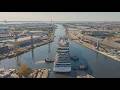
Thus, according to the report "Trends and Perspectives in EuroMed Cruise Tourism," prepared by the Italian consultancy Risposte Turismo for the Cruise Lines International Association (CLIA), European Mediterranean countries could receive 48.6 million cruise passenger movements in 2023, returning to levels similar to those of 2019, when 53.3 million were reached. Of these, more than 22 million would be concentrated in Italy and Spain, with Barcelona remaining the most important European cruise port.
In 2019, according to CLIA figures, the cruise industry in Spain generated nearly €6 billion in revenue, contributing €2.8 billion to the national GDP. Furthermore, it is estimated to have created over 50,000 jobs, generating €1.5 billion in wages.
Recovery and Sustainability: Leadership in the Green Transition.
Regarding the industry's commitment to sustainability, CLIA's Director for Europe, Marie-Caroline Laurent, states: “We are convinced that the economy of the future will undoubtedly be shaped by the green transition and that tourism must become increasingly sustainable.” Thus, “we are driving the recovery of tourism in Europe from an approach centered on a commitment to sustainability, working with destinations to ensure that passenger flows generate the least possible impact. Our industry can and must play a leading role in the green transition,” Laurent explains.
In the next five years, 93% of new cruise ships will be built in European shipyards, resulting in 78 new vessels, an investment of around 47 billion euros and an indirect economic impact of more than 200 billion euros on the continental economy.
In terms of decarbonization, these figures are “significant”, according to Laurent, since “one in five ships will be powered by liquefied natural gas (LNG) and two in three ships will be equipped with shore-connection systems.”.
“24 LNG-powered ships will be launched in the next six years, however,” notes the CLIA Director General for Europe, “only six European ports currently offer shore power connections; this is why we urge governments to invest more in infrastructure and the development of alternative fuels, as well as to establish a clearer and more uniform regulatory framework.”.
Use of Advanced Technologies:
CLIA member cruise lines – which operate 95% of the world's cruise ship fleet – are committed to equipping their new and newly built vessels with the most advanced environmental technologies.
81% of ships will be equipped with advanced water treatment systems by 2027.
81% of ships not powered by liquefied natural gas will be equipped with advanced water treatment systems by 2027.
100% of waste generated on board is reused or converted into energy, a rate far higher than on land.
In the next 15 years, the entire CLIA fleet will be powered by liquefied natural gas, which produces zero sulfur emissions, 85% fewer nitrogen oxides, almost 100% fewer particulate emissions, and up to 20% fewer greenhouse gases.
In addition, ships that currently operate on conventional liquefied natural gas will soon be equipped to use renewable synthetic natural gas.
For his part, Francesco di Cesare, president of Risposte Turismo, points out: “This new study we conducted on the present and near future of the cruise industry in Europe and the Mediterranean indicates that 2022 could close with approximately 38 million passenger movements in the region's ports. Furthermore, the forecast for 2023 is very positive: it is estimated that passenger traffic levels very close to those of 2019 could be reached thanks to the continued commitment of the cruise lines and ports. To achieve these results, the contribution of all stakeholders is essential, and it is crucial that they base their growth on solid and sustainable foundations.”.