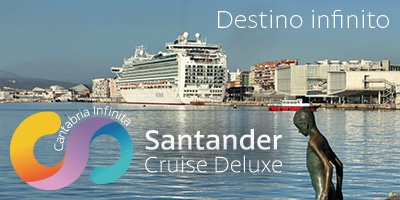

On June 14th, CLIA Spain, in collaboration with MSC Cruises, offered a visit to the MSC Bellissima to demonstrate the level of sensitivity of the industry in the environmental field, as well as the sophistication of the anti-pollution facilities on board cruise ships.

The cruise industry and ecology.
 The efforts of cruise lines to reduce pollution generated by their ships are undeniable, even for the most critical groups within the industry. However, their attempts to disseminate this reality globally, as an industry, have thus far been limited and have had little impact. This situation has begun to change, as evidenced by the visit organized by CLIA on June 14th to the MSC Bellissima, the most modern ship in the Mediterranean. Representatives from the Catalan regional and local administrations attended, including the Generalitat of Catalonia, the Catalan Waste Agency, the Barcelona City Council, Barcelona Oberta, the Port of Barcelona, CIEMAT, and the Polytechnic University of Catalonia and Pompeu Fabra University, among others.
The event began with a speech by Alfredo Serrano, who detailed the cruise industry's commitment to the environment.
The cruise industry is highly regulated, and a ship can be inspected by up to three entities: the country where it docks, the ship's flag state, and the classification society. Knowing the rigor of these inspections, cruise lines build their ships to comfortably comply with this legal framework, investing in increasingly complex and sophisticated facilities in three main areas: waste management, emissions, and energy efficiency.
Waste management is regulated by the MARPOL Convention and its annexes. Non-compliance with MARPOL results in fines and ship arrests. However, according to the EU Database, no cruise ship has been detained for this reason . In Spain, the Ministry of Public Works, which oversees the Maritime Authorities, has also not detained any cruise ships in the last thirty months.
Furthermore, cruise lines use AWTS wastewater treatment technologies, whose processed water is purer than that treated in the cities where they dock. They also eliminate the introduction of invasive species by treating ballast water, and virtually all cruise lines have eliminated the use of single-use plastics.
Atmospheric emissions reduced to a minimum.
 The cruise industry accounts for only 2.5% of the maritime sector's greenhouse gas emissions. As in the previous section, these emissions are regulated by the MARPOL Convention, and no cruise ships have been detained for this reason in recent years.
Cruise lines are facing the future with several types of measures:
Passives.
- Use of clean liquid fuels, such as diesel, biofuels, etc.
- Increasingly efficient diesel engines, and energy recovery systems from cooling water and exhaust gases, which are used for heating or to produce fresh water.
- Use of cold ironing technologies to disconnect onboard engines in port, using the land network.
- Reduction of onboard consumption: efficient hulls, use of LED lighting, etc
Active.
- Exhaust gas scrubbing with EGCS or scrubber technologies, which can remove up to 98% of sulfur oxides and 90% of suspended solids. It converts the fumes into steam.
- Use of LNG (Liquefied Natural Gas) as fuel. The AidaNova consumes LNG in Barcelona every Friday (95% reduction of sulfur oxides and 90% of nitrogen oxides).
- Ships equipped with batteries and fuel cells.
Ultra-efficient cruise ships.
Speed reductions, improved hull design, the use of friction-reducing silicone paints, LED technology, trim control, and other factors have resulted in a reduction of up to 50% in the installed power of cruise ships. New technologies such as solar panels and energy storage systems are already being implemented on board.
Furthermore, cruise ships are self-sufficient in terms of water production, and their water has a higher level of purity than that of many ports of call. And the new generation of cruise ships makes the most of every last drop of water, reusing it for cleaning, laundry, toilets, and so on.
The MSC Bellissima, an example of energy efficiency.
CLIA concluded the event with a visit to the engine room of the MSC Bellissima, guided by its chief engineer and several officers. All the visitors were able to observe the operation of the scrubbers, the greywater and bilge water treatment plant, the segregation, storage, and management of onboard waste, and more.

The design of MSC Bellissima incorporates some of the latest available environmental technologies, such as a Bio-Sea UV ballast water treatment system, a state-of-the-art hybrid exhaust gas scrubbing system, an advanced Scanship wastewater treatment plant, and even propeller shaft bearings lubricated by water instead of oil. The vessel also features a heat recovery system and LED lighting.
Perhaps the most important aspect of the visit was witnessing two key realities: the sophistication of the onboard waste treatment facilities and the meticulously detailed and elaborate procedures developed by MSC Cruises. Finally, the crew's level of involvement is exceptional, from the steward cleaning the cabin to the dedicated environmental officer onboard. Having achieved the challenge of eliminating single-use plastics onboard, the next step is finding a substitute for bottled water. Some cruise lines (on smaller vessels, especially in the exploration segment) distribute returnable glass bottles as an alternative. We will surely see further developments in this area on larger ships soon, given the cruise lines' commitment to environmental responsibility.