
Executives from shipping companies, ports and destinations and industry professionals from around the world, along with numerous Spanish travel agents, met at the sixteenth edition of the International Cruise Summit to analyze the operational and commercial challenges of the sector and strengthen collaboration between all its actors.
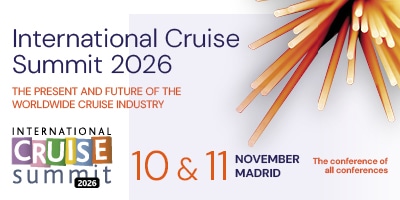
The sixteenth edition of the International Cruise Summit (ICS), organized by Cruises News Media Group and held on November 10 and 11 in Madrid, brought together shipping companies, ports, destinations and suppliers from around the world, as well as a large group of Spanish travel agents, to analyze the major challenges of an industry that continues to grow sustainably and that in 2025 reached 37 million passengers worldwide.
 In Spain, the cruise industry generates 64,000 jobs and contributes €3.9 billion to GDP, figures that rise to 445,000 jobs and €28.3 billion in GDP when considering all of Europe. Furthermore, up to 60% of cruise passengers return to one of the destinations they visited on their cruise for a longer stay, meaning that the benefits of each port call for the local and regional economy are sustained over time. Even so, a growing number of local governments are considering implementing tourist taxes that could jeopardize future port calls.
Leonardo Massa, Vice President for Southern Europe of MSC Group's cruise division, emphasized the industry's full willingness to collaborate with local authorities in managing tourist flows: “No other tourism sector can predict two years in advance what day, at what time, and how many people will be in a destination, as we in the cruise industry can.” This ability to forecast is a huge advantage for managing tourism responsibly.
Specifically, collaboration between destinations and shipping companies was the focus of the Great Debate, which in its second edition raised the question of whether the future growth of cruises depends on greater alignment between the two, with the participation of Marella Cruises, Fred. Olsen Cruise Lines, Copenhagen Malmö Port and the Port Authority of Valencia.
It is also a resilient industry, capable of adapting quickly to geopolitical changes. Following the outbreak of conflict in the Middle East, shipping companies have opted to reposition their vessels in the Mediterranean during the winter, and also in Northern Europe, a destination that is experiencing renewed growth after the slowdown it suffered with the start of the war in Ukraine.
Beyond geopolitical and fiscal shifts, the sector continues to evolve with several clear trends: the development of private destinations on islands in the Bahamas and the Caribbean, and the rise of luxury and ultra-luxury cruises driven by hotel brands. Both topics had their own sessions at the ICS: Carnival Cruise Line and Azul Destinations analyzed the private destination model, while The Ritz-Carlton Yacht Collection, Aman at Sea, Silversea, and Oceania-Regent Seven Seas debated who will win over the ultra-luxury customer. Many speakers and attendees predicted that private destinations will also emerge in Europe within the next ten years.
 Virginia López Valiente, CEO of Cruises News Media Group, interviewed Samantha Stimpson, CEO of Fred. Olsen Cruise Lines, a cruise line primarily focused on the British market. Beyond her executive role, Stimpson revealed her more personal side and reviewed a professional career that began in her family's travel agency.
López Valiente also spoke on stage with Omar Al Jaber of Qatar Tourism, who outlined the organization's plans to revitalize the sector once the conflict in the region ends. For his part, Dr. Anas Rakha of the Suez Canal Authority quantified the economic and environmental costs to the maritime sector of circumnavigating Africa instead of reaching the Mediterranean via the canal, and offered the attending shipping companies a significant tariff reduction.
The program also included presentations from the Japanese cruise line Asuka Cruise and the French company Club Med, with their sailing cruises.
Artificial intelligence is increasingly present in all professional fields, and the cruise industry is no exception, although its application is still in its early stages. Its use for travel planning is becoming more established, and at the ICS, AI tools were presented that allow each traveler to find plans and products tailored to their preferences.
In this regard, shipping companies expressed concern about passengers receiving accurate information, as AI tools sometimes draw it from forums, review websites, and other sources that may be outdated or contain errors. Therefore, they are working to ensure that AI has access to the most reliable information possible.
 The organization has already announced the dates for the next edition: ICS 2027 will be held on November 16 and 17 at the Meliá Castilla hotel in Madrid.
Follow cruise news at Cruisesnews.es