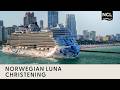

The Port of Barcelona closed the first half of 2026 with positive growth in key traffic indicators. In the first six months of the year, passenger traffic at the Port totaled 2.44 million (+4.1%). Ferry traffic showed positive growth, with an increase of 2.5%, and cruise ship visitors to the city rose by 3.4%, slightly exceeding one million people.
 During the presentation of the results, the CEO of the Port of Barcelona, Àlex Garcia, highlighted the port’s ability to maintain positive growth in an international context marked by geopolitical tensions and trade uncertainty. In this regard, he noted that “traffic figures for the first half of the year demonstrate the Port of Barcelona’s adaptability and resilience in the face of an increasingly complex global environment. “The diversification of markets, customers, and logistics chains allows us to continue growing and maintain the competitiveness of our business community.”
One of the factors that has influenced traffic trends in recent months has been the situation in the Persian Gulf and the tensions surrounding the Strait of Hormuz. Despite this context, the Port has maintained its growth in liquid bulk cargo thanks to the diversification of supply sources and strong performance in the chemicals and biofuels sectors.
Àlex Garcia emphasized that “geopolitical tensions have once again highlighted the importance of having resilient and diversified supply chains. The Port of Barcelona has demonstrated its ability to adapt quickly to market changes and ensure the supply of products essential to the economy.”
This positive trend in traffic comes during a half-year in which many of the projects being developed by the Port of Barcelona have begun to bear fruit. In just six months, significant progress has been made in its logistical, energy, and technological transformation; the largest investment cycle in its history has been consolidated; and its role as a driver of the economy and international trade has been strengthened.
Among the various projects that will shape the port of the future, the following stand out: the bidding process for the major transportation hub serving the new land access routes; the awarding of contracts for the new liquid bulk berths at the Energía Pier; the awarding of contracts for the electrical infrastructure that will complete the electrification of the Adosado Pier; and the partial acceptance of various projects related to the new rail access routes and the Nou Llobregat terminal. This set of infrastructure projects forms the foundation for the Port’s future growth and the concentration of logistics activity in the southern area.
José Alberto Carbonell, president of the Port of Barcelona, used his remarks to announce a strategic step forward for the future development of the southern part of the port complex. Radio compatibility studies conducted over the past few months by technical experts from the Port of Barcelona and ENAIRE, the state-run air navigation authority—the results of which were recently released—conclude that the port activity planned for the future Catalunya and Jaume I docks is compatible with both the current operations of Josep Tarradellas Barcelona-El Prat Airport and the configuration planned following its expansion. This conclusion allows the Port to move forward with its planned growth projects in the southern area, where a large portion of container traffic-related activity will be concentrated over the coming decades.
José Alberto Carbonell has spoken very highly of the results of the studies and emphasized that “this is a decisive step because it provides security and certainty regarding the Port’s future development. The conclusions of the studies show that the airport’s growth and the development of the southern part of the Port are fully compatible and allow us to move forward with two strategic projects for the competitiveness and prosperity of Barcelona and Catalonia. Today we know that we can continue building the Port of the future with every assurance.”
The president of the Port of Barcelona also noted that exactly one year ago, an agreement was signed with ENAIRE for the purchase and installation, at a new location, of primary and secondary radar systems, with an investment of 4.5 million euros by the Port of Barcelona.
The first half of this year has also made it possible to consolidate projects aimed at generating new economic activity and attracting investment to the region. Among the most notable initiatives are the construction of Elian’s new industrial plant, with an investment exceeding 200 million euros; the start of the concession process for the future public multipurpose maritime terminal at the Príncep d’Espanya pier, which has received three bids—Manipuladora de Mercancías, Boluda Maritime Terminals, and Andino Inversiones Global—; the approval of Baleària’s new ro-ro terminal and the start of construction on ICO’s new vehicle terminal, designed to strengthen Barcelona’s position as a logistics and automotive hub for southern Europe.
The transformation of the Port of Barcelona is also moving forward in the energy sector. During the first half of the year, progress was made on the electrification of the docks, with the awarding of the contract for the OPS system at the future Cruise Terminal G and the electrical infrastructure needed to power the terminals at the Adosado Dock.
At the same time, the Port continues to strengthen its role as a leading energy hub in the Mediterranean by promoting alternative fuels and zero-emission mobility. In this regard, a contract has been awarded for the construction and operation of the Port’s first hydrogen refueling station, and one of the first operations to supply bioethanol to a container ship was recently carried out.
The first half of the year also reinforced the Port of Barcelona’s commitment to innovation and the blue economy. In January, the cornerstone was laid for the future BlueTechPort, a project involving an investment of 60 million euros that will become one of Europe’s leading hubs specializing in the blue economy, innovation, and entrepreneurship.
Over the past few months, initiatives have also been launched, such as the agreement with AltaSea at the Port of Los Angeles; the development of the project for the first digital twin of the seabed at the Port of Barcelona, led by the BCN Port Innovation Foundation; and the establishment of a strategic alliance with the Shanghai port authorities to make progress in areas such as digitalization, security, sustainable maritime corridors, and alternative fuels.
One Year Since the Implementation of the Cruise Ship Agreement
Coinciding with the first anniversary of the agreement between the Port of Barcelona and the Barcelona City Council to transform cruise ship operations, José Alberto Carbonell took stock of this first year and announced the closure of Terminal C at the Adosado Pier—which will receive its last cruise ship on October 30—and the South Terminal at the Barcelona Pier, where the last cruise ship call will take place on December 31.
Over the past few months, the Port has also made progress on the electrification of the cruise terminals, has promoted the urban corridor along the waterfront, has reactivated the Council for Cruise Sustainability, and is finalizing the study assessing mobility related to this activity.
These initiatives are part of the shared goal of moving toward a cruise ship model that offers greater added value, is more sustainable, and is better integrated with the city.
To conclude the earnings presentation, the president of the Port of Barcelona summarized the results for the first six months, stating that “this year has shown that the Port does more than just manage traffic. We are building the infrastructure, connectivity, energy solutions, and innovation ecosystems needed to ensure the competitiveness of the Port of Barcelona and the economy as a whole for decades to come.”
Follow the news about cruise ships atCruisesnews.es